OLT Curriculum for Jamf Connect’s Identity and Access Management Solution
-
A self-blended e-Learning course featuring a concise ~5-minute instructional video. This OLT was approximately 10 minutes in length.
-
Jamf’s Global Revenue Enablement stakeholders and Jamf’s commercial ambassadors (aka external partners).
Before this initiative, Jamf partners faced challenges articulating the unique value of Jamf's identity and access capabilities, struggling to distinguish them from competitors.
-
GTM Jamf’s and Jamf’s commercial ambassadors (aka external partners).
-
Upon completion of this course, learners should be able to:
1. Analyze and formulate questions to identify customers' needs or challenges related to identity and access management that Jamf can address.
(Analyze - Bloom's Taxonomy)2. Articulate how Jamf contributes to helping customers attain specific objectives.
(Explain - Bloom's Taxonomy)3. Evaluate and communicate the real-world impact and value of utilizing Jamf for identity and access management.
(Evaluate - Bloom's Taxonomy) -
I was the designer in charge of this project from concept to implementation and utilized ADDIE Methodology as my framework to ensure its success.
-
Following the project's quarter-long launch, data confirmed a substantial impact: learners completing the curriculum experienced a ~30% surge in identity and access management sales, an ~80% improvement in objection handling competency, maintaining an overall course rating of 5/5.
-
The data for this enablement was collected through a combination of quantitative and qualitative methods. Quantitatively, I analyzed sales performance metrics, specifically focusing on the identified key performance indicators (KPIs) related to identity and access management. This involved tracking the sales figures of individuals who completed the curriculum compared to those who did not.
Additionally, surveys and assessments were distributed to learners to gather qualitative insights. These assessments covered various aspects, including self-reported improvements in objection handling competency and their perception of the overall course quality. The 5/5 course rating was a result of aggregating individual learner feedback, which provided a qualitative measure of their satisfaction and perception of the training.
The combination of quantitative sales data and qualitative learner feedback allowed for a comprehensive evaluation of the project's effectiveness over the quarter.
Now, let’s deep-dive into the course!
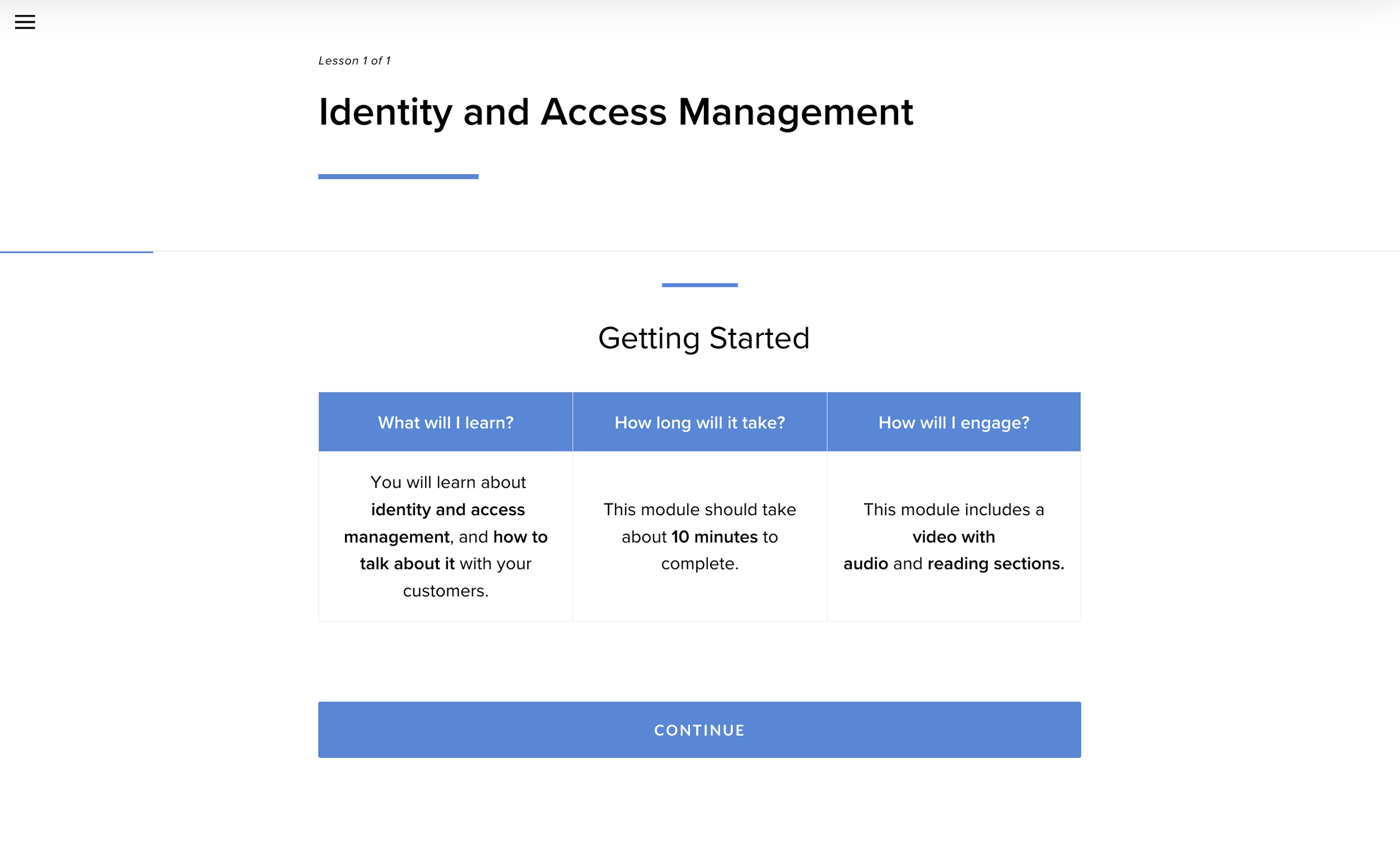
Course introduction
Learners are briefed on three main components:
What they will learn
How long it will take them
How they will engage with this content
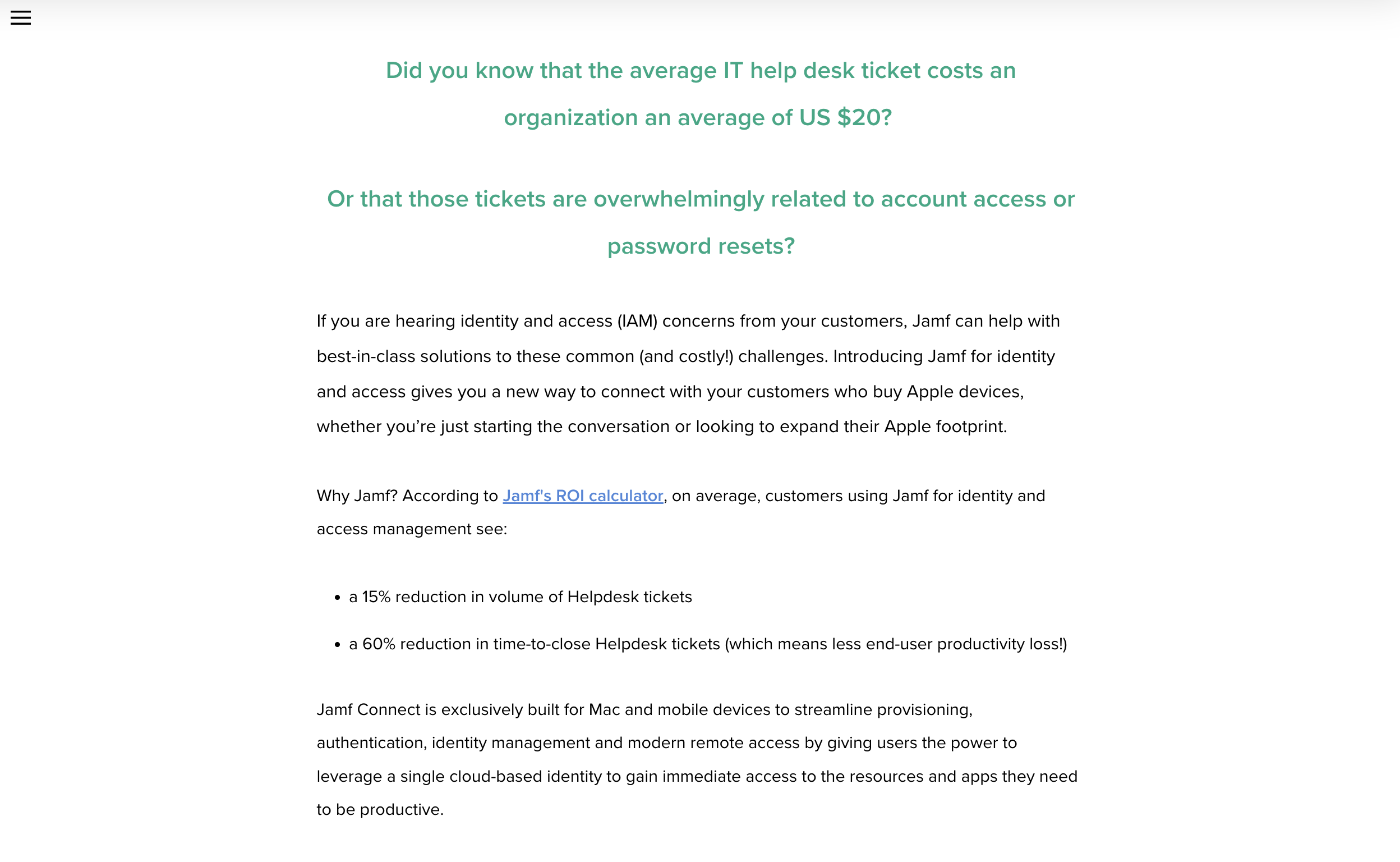
Validating the learner and building value.
Why should sellers invest their time in yet another training? Do we truly grasp the daily grind and the conversations they navigate?
As a designer, my focus was on promptly addressing those concerns. I spotlighted the common questions they face and set the stage for how this course would add value.
This segment of the course aims to secure learner buy-in.
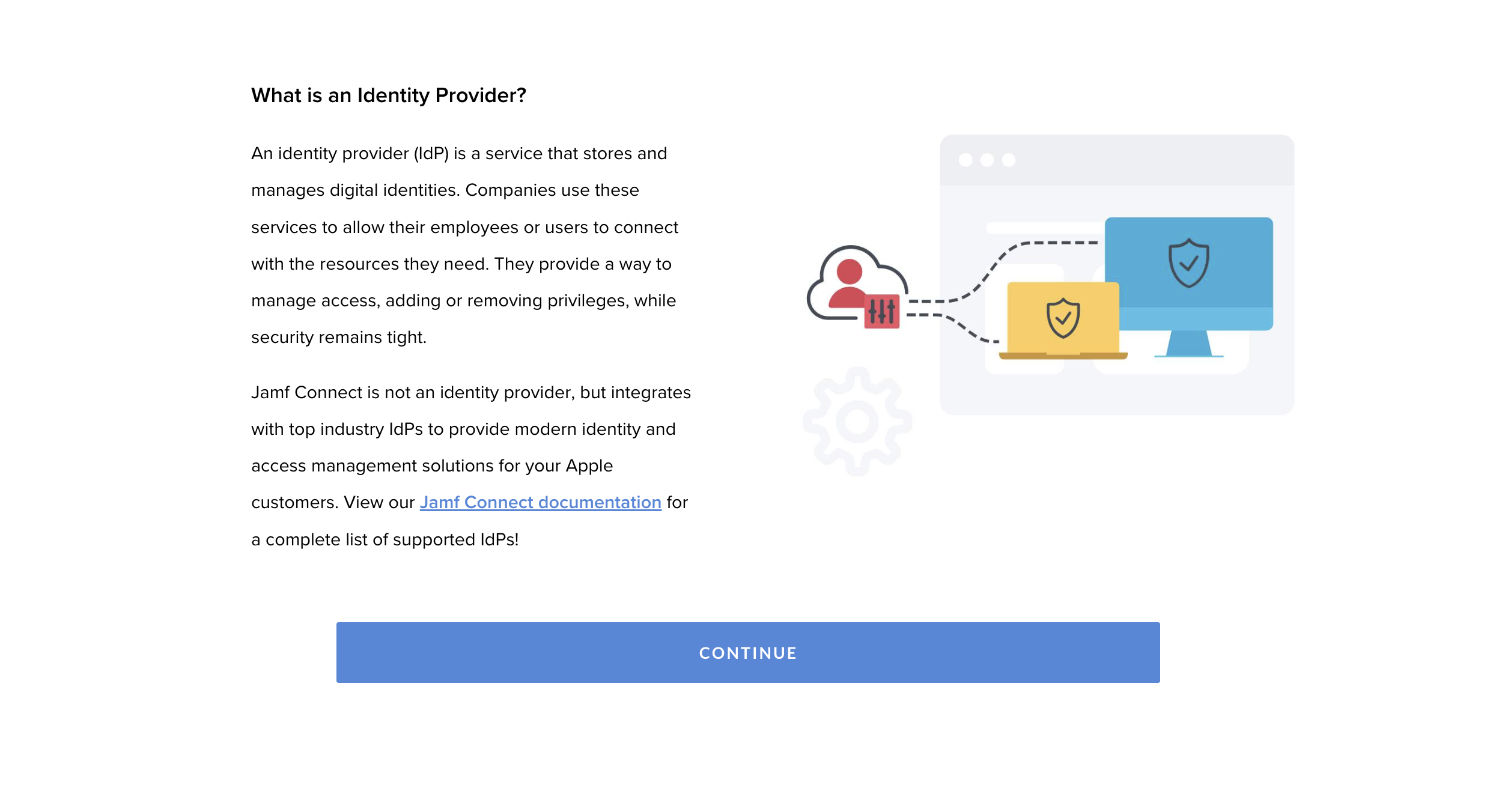
Getting straight to it.
Learners, oftentimes, don’t feel they have the time, bandwidth, or attention span.
They are often enrolling in a training to tell their manager they completed it.
There is no time to over-explain, so I immediately get to answering their questions — what is this and why does it matter to me?
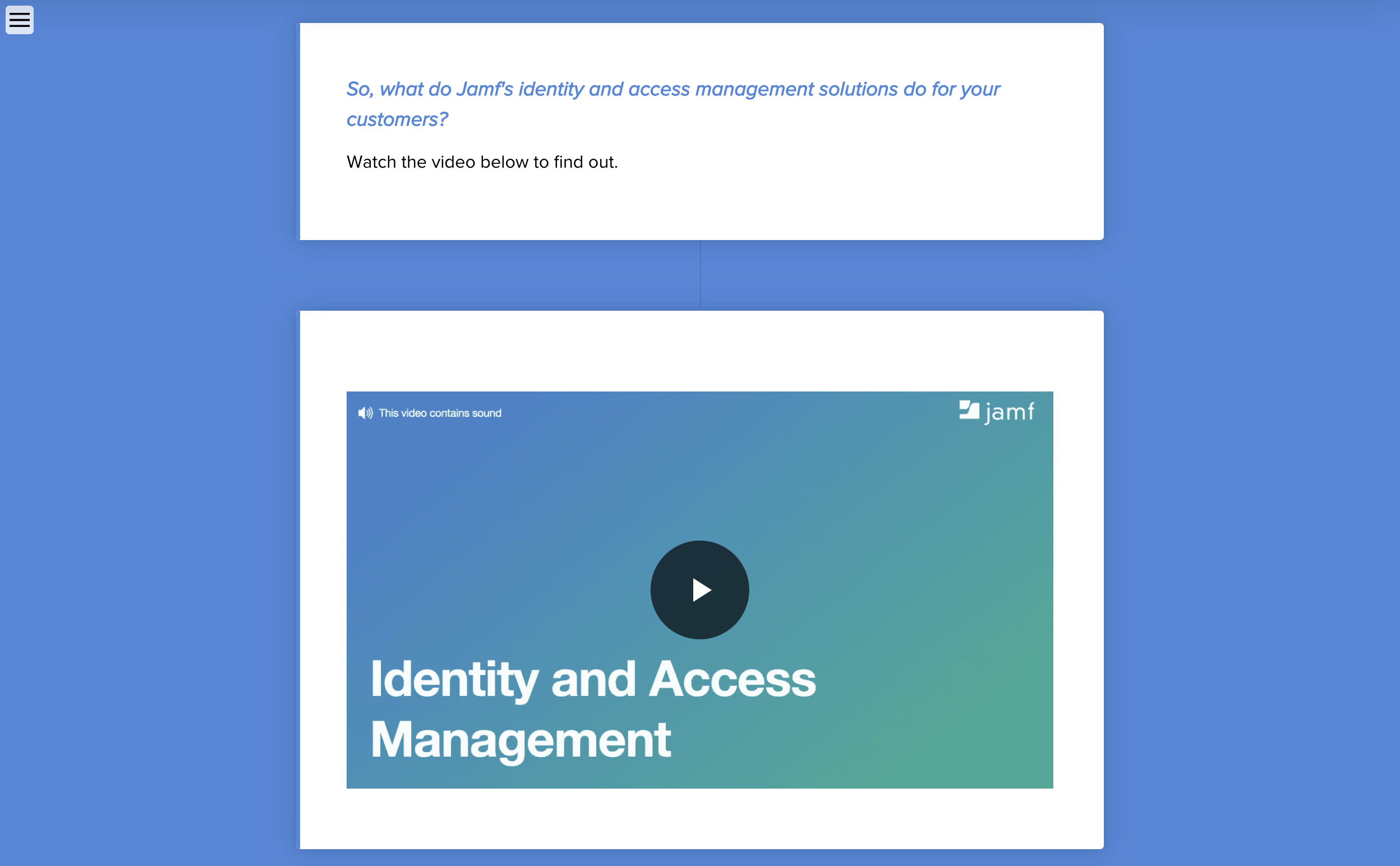
The bread and butter.
To make sure learners really grasped the value of this solution, I took a visual approach. In the video, I focused on:
Explaining why we created this solution in the first place.
Showing how tough a customer's life can be without the solution.
Illustrating how the solution transforms a customer's experience.
The goal was to evoke emotions in learners, helping them understand and address customer needs, whether the customers were aware of them or not.
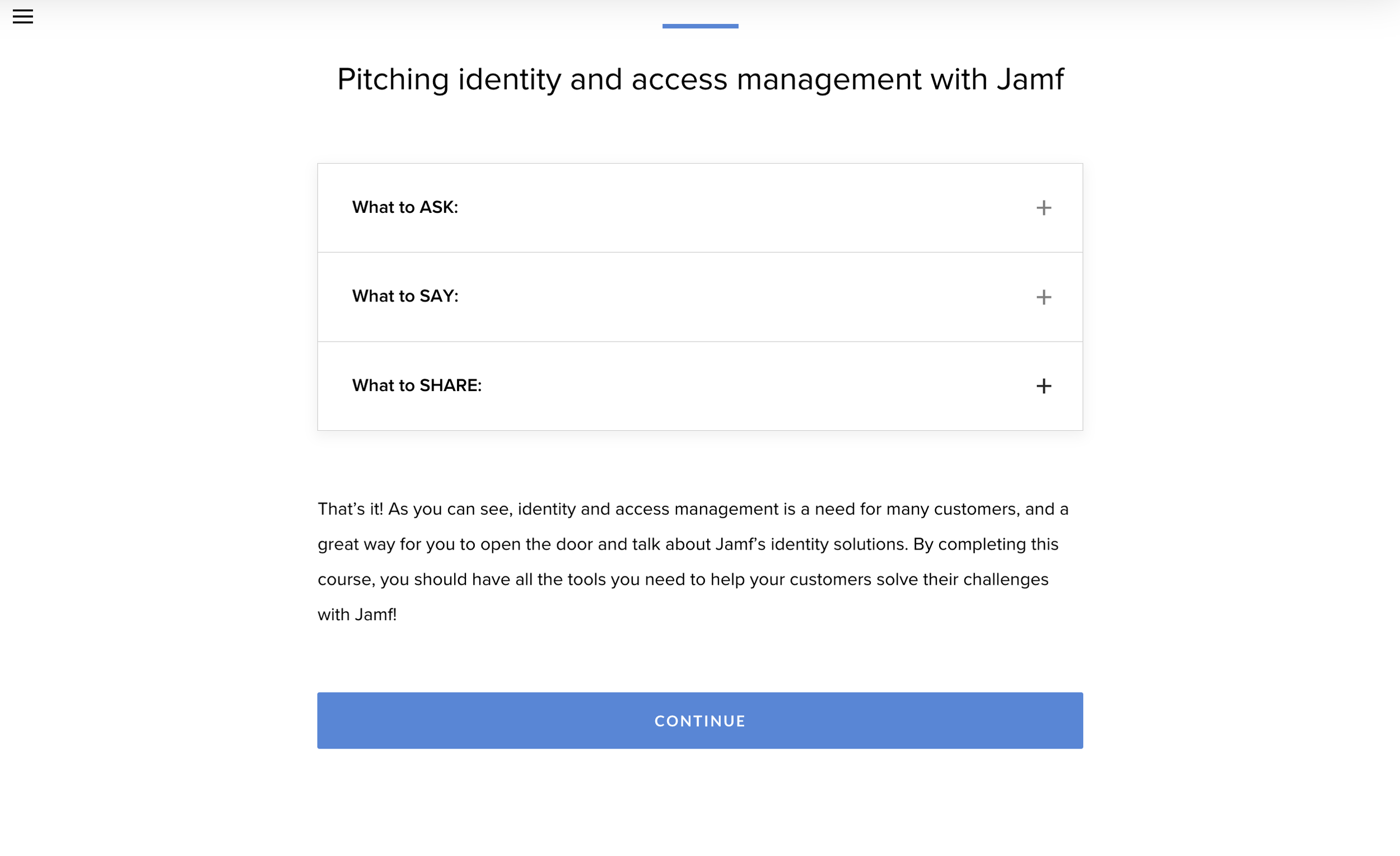
Cool visuals, but how do they speak about it?
Enablement with flare is always great (and fun to produce) but what is the value in it if learner’s have no idea how to apply what they’ve learned in real life?
Having been a seller myself, I know the confidence that comes with having well-defined discovery questions, objection-handling strategies, and resources to share.
This section was designed to accomplish that in a bite-sized, digestible approach utilizing the accordion feature.
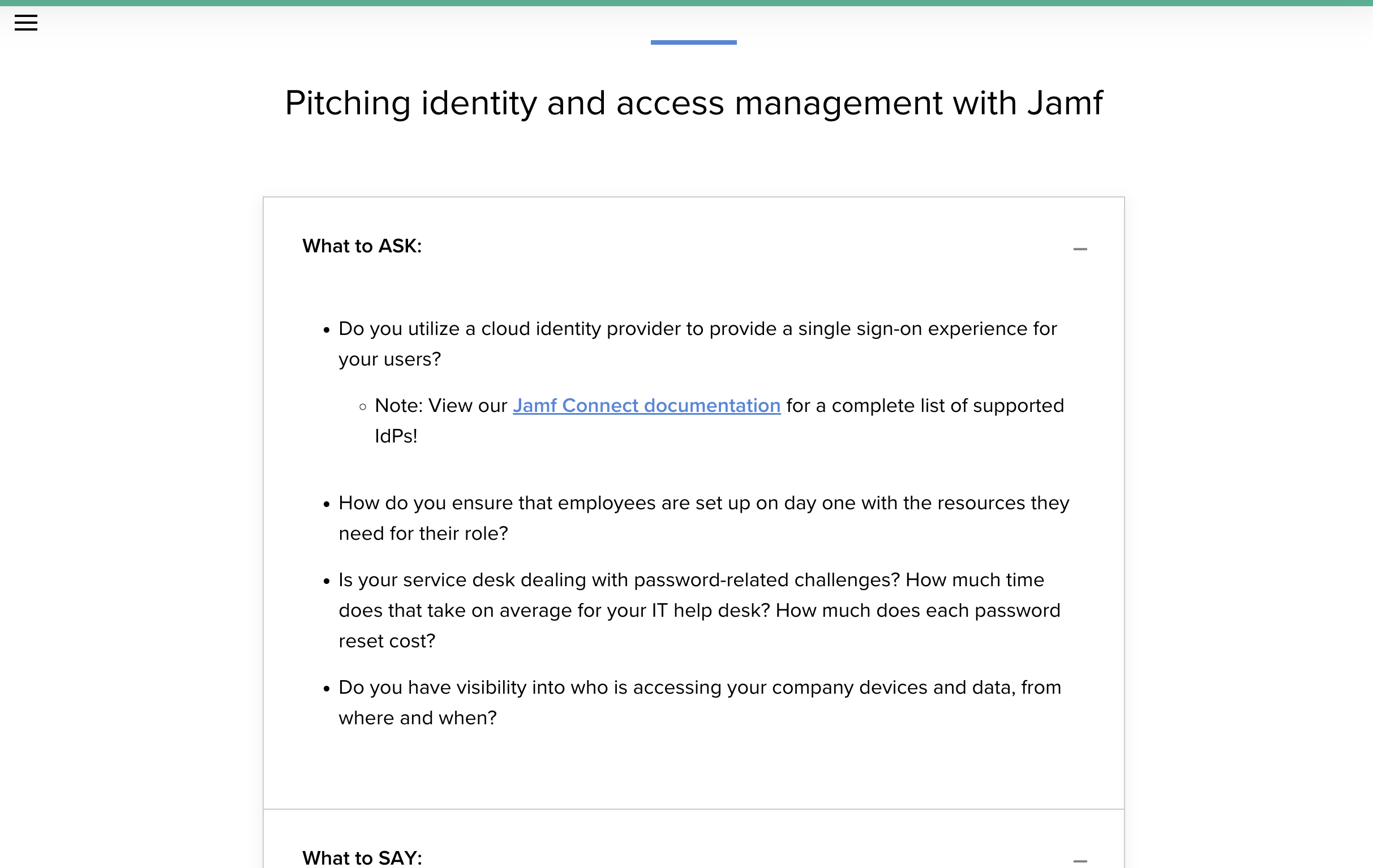
A snapshot of what the content looked like.
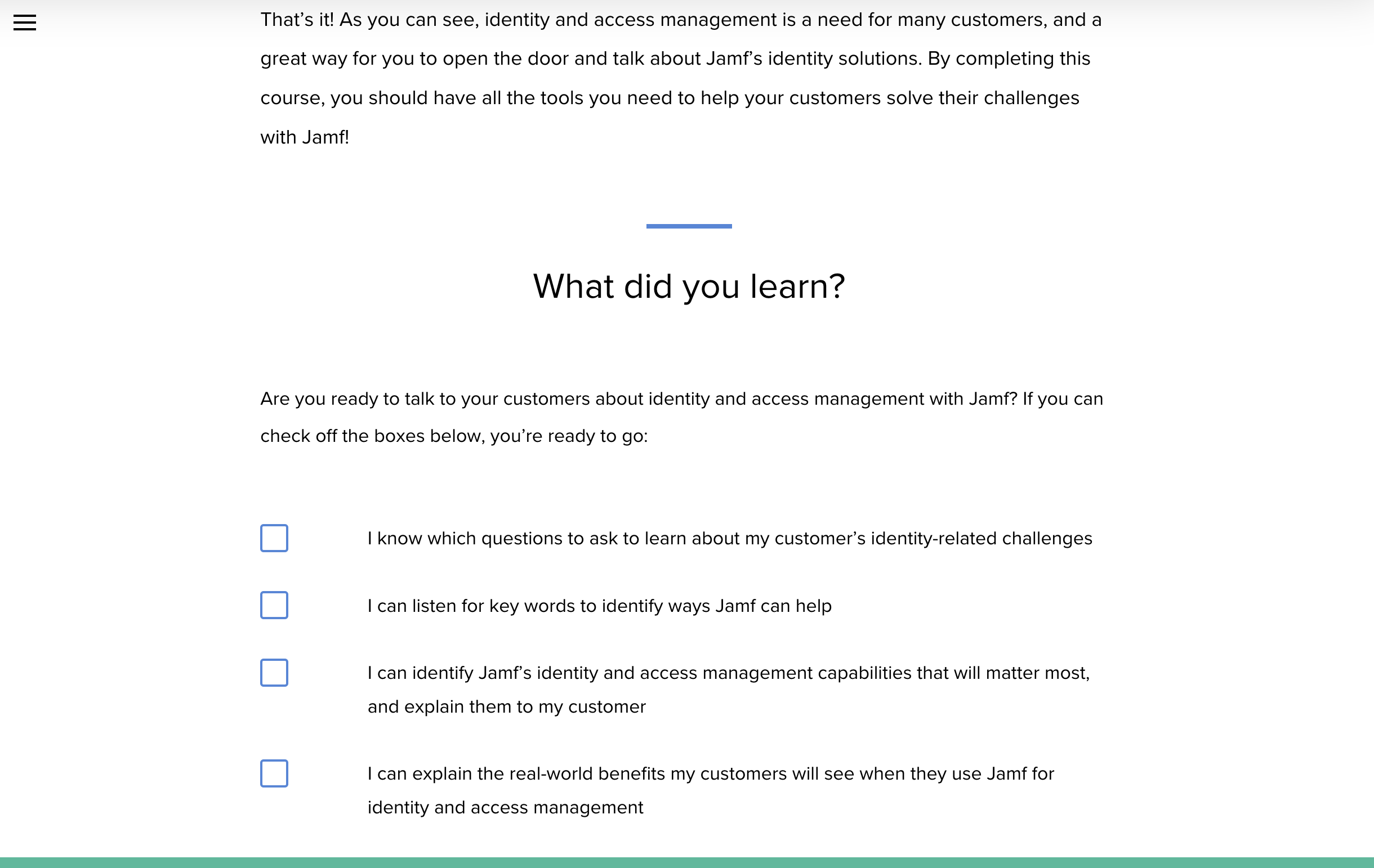
And, that’s it!
Working smarter not harder is always my motto.
With this piece of enablement, I got straight to the point, highlighting the value learners would gain by the end of the course.
Incorporating vibrant visuals, utilizing color and interactivity as ways to prevent cognitive overload, and ensuring the course was quick and engaging to keep the learner’s attention were all components at the forefront of my design.
The feedback I’ve received on this since its launch validate that the goal was accomplished.